
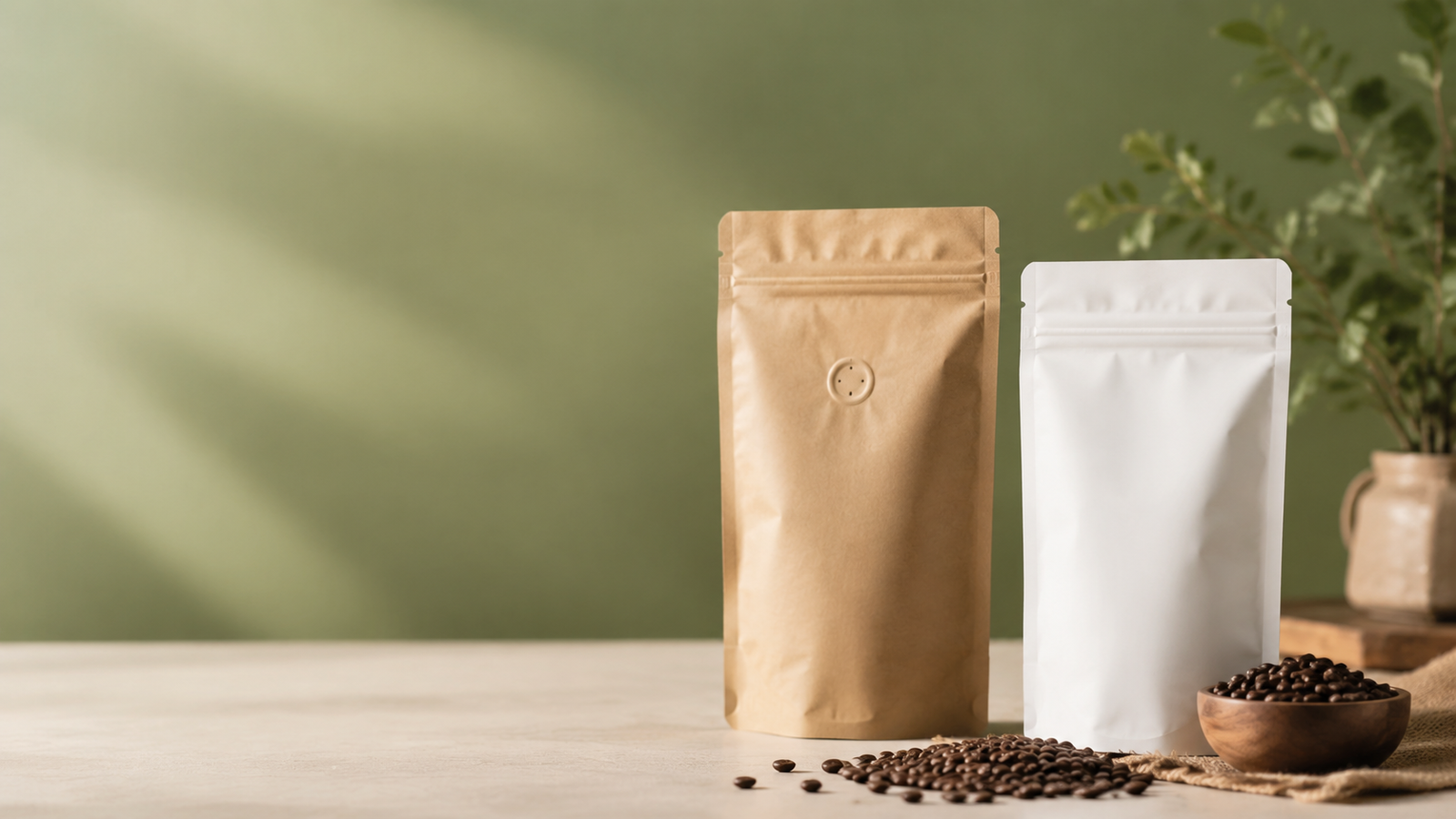
What a one-way valve does
A one-way degassing valve allows carbon dioxide (CO2) to escape from the bag while preventing oxygen from entering. This is especially important for freshly roasted coffee beans, which continue releasing gas for days or even weeks after roasting.
When do you need a valve?
Coffee bags with valves are recommended for freshly roasted whole beans, fresh ground coffee, and premium specialty coffee. Without a valve, gas buildup inside the bag may cause swelling or even damage the seal.
When is a valve not necessary?
Coffee bags without valves are suitable for instant coffee, drip coffee sachets, coffee products with short shelf life, or coffee packed long after roasting. Since these products release little or no gas, a valve is often unnecessary.
Key difference
At Lvpai Packaging, we offer both valve and non-valve coffee bag solutions, helping brands choose the right packaging based on product type and market needs.
- With valve: better for preserving aroma and preventing bag expansion
- Without valve: lower cost and simpler structure