The printing method affects your minimum order, your lead time and your cost per bag more than almost any other packaging decision. Both processes produce excellent results; they simply have different economics.
Rotogravure
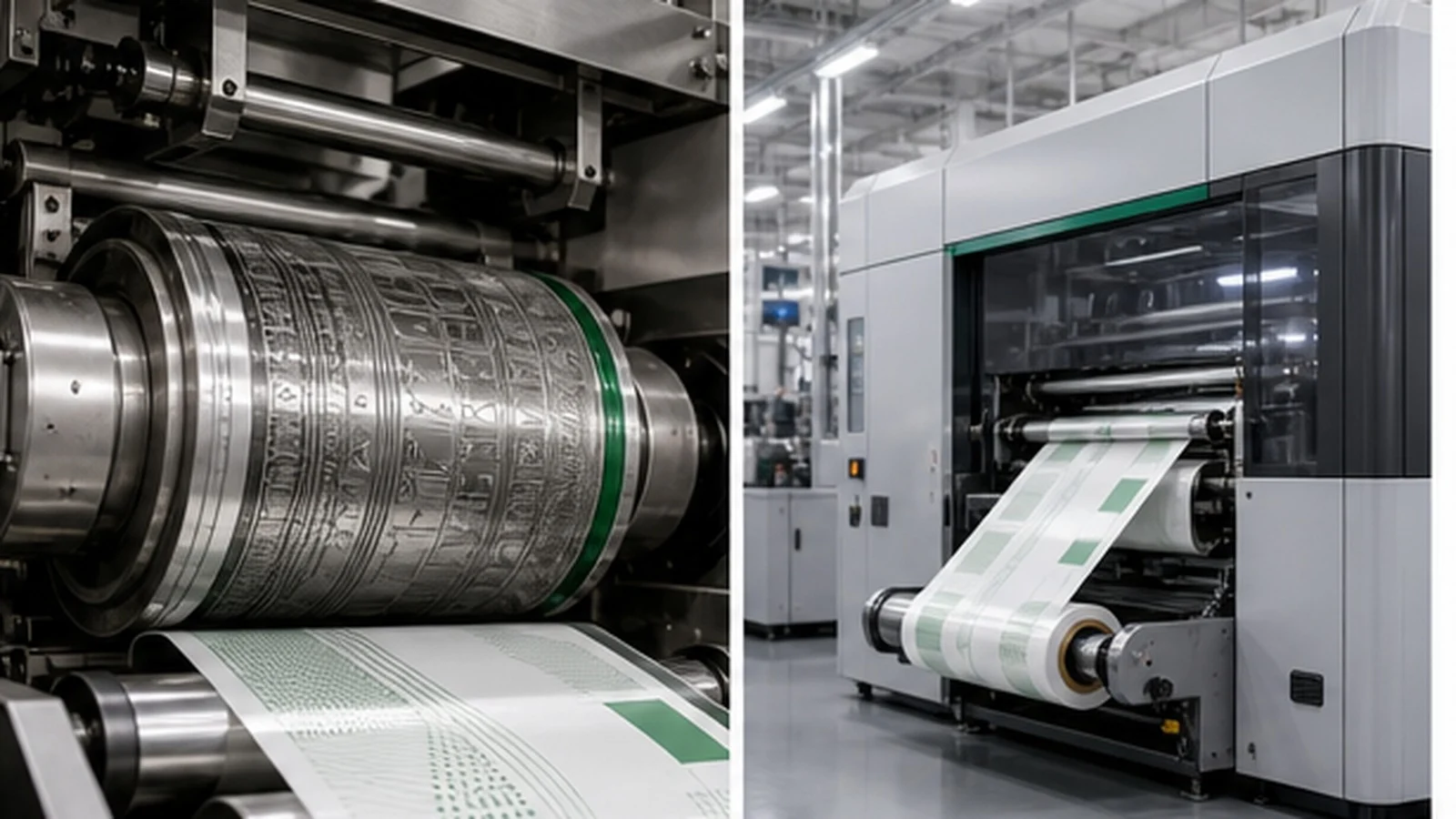
Rotogravure engraves each colour onto a cylinder. Plate making is a real upfront cost and takes time, but once the cylinders exist the per-metre cost is low and colour consistency across a long run is excellent. It also handles special effects such as metallic inks and heavy solid coverage better than digital.
It is the right choice for established SKUs with stable artwork and volumes from tens of thousands of bags upward.
Digital printing
Digital printing needs no plates, so a new design can be on press quickly and cheaply. That makes it well suited to launches, market tests, seasonal editions, regional language variants and short-run personalisation. The trade-off is a higher per-metre cost, so unit economics get worse as volume rises.
How to choose
- Under about 5,000 bags per design: digital is usually cheaper overall once plate costs are counted.
- Frequent artwork changes or many SKU variants: digital avoids repeated plate investment.
- Stable, high-volume SKUs: rotogravure gives the lowest unit cost.
- Metallic inks, spot colours and heavy solids: rotogravure reproduces these more reliably.
A practical combination
Many brands we work with launch digitally to validate a design in market, then move the winning SKUs to rotogravure once volumes justify the plates. We support both processes in house, so a transition does not mean changing supplier or re-qualifying the structure.