
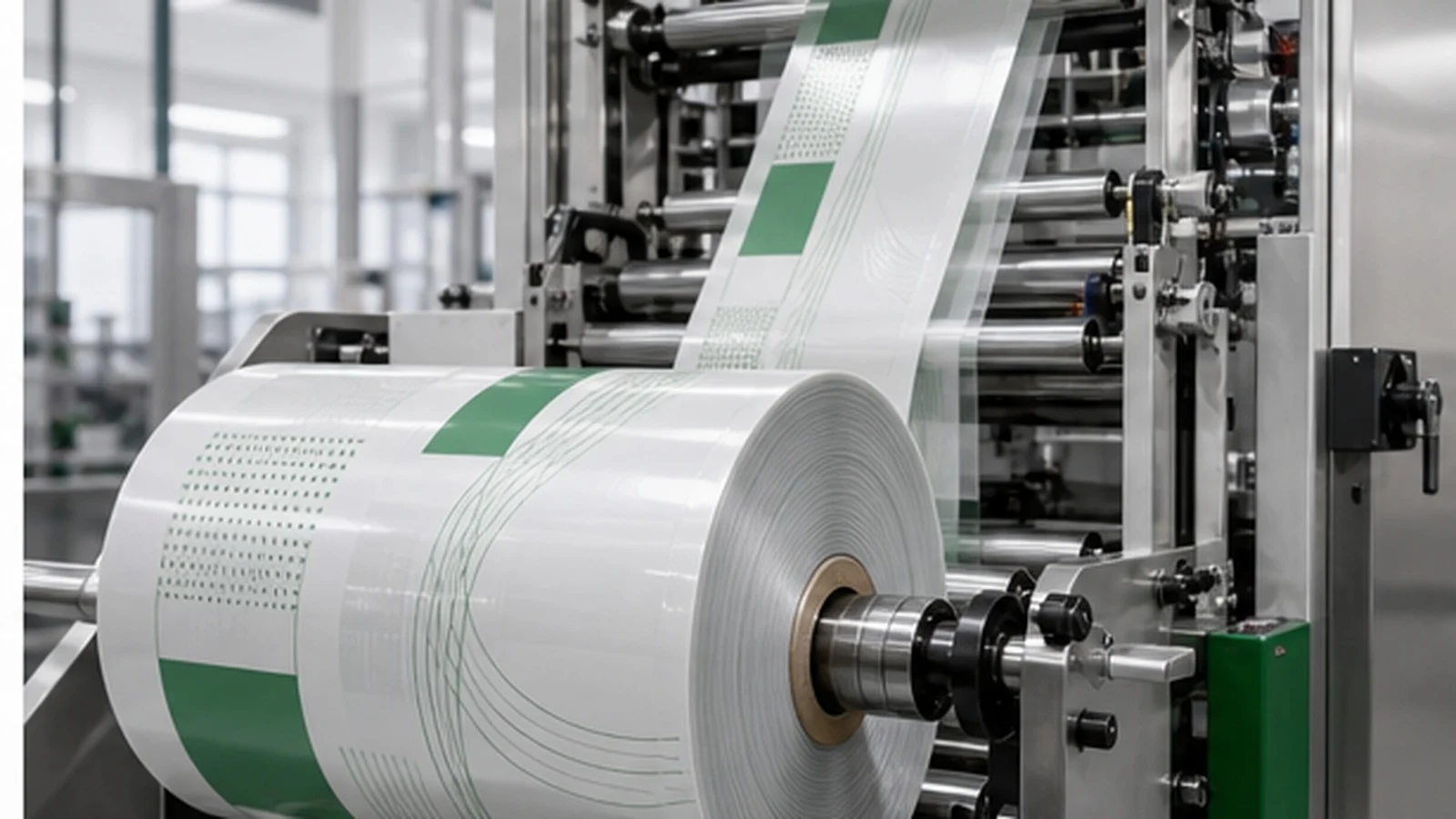
When packaging is formed on your own vertical form-fill-seal line, the film is part of the machine setup. Film that is nominally correct but wrong on slip or stiffness will cost you in downtime and rejects even though the specification looks right on paper.
Dimensions and core
Film width has to match the forming tube plus the seal overlap, so it is derived from bag dimensions rather than chosen freely. Roll diameter is limited by the unwind spindle, and core size (3-inch or 6-inch is standard) has to match your shaft. Larger rolls mean fewer changeovers, which reduces start-up waste but requires more clearance and a heavier lift.
Surface behaviour
Coefficient of friction determines how the film slides over the forming shoulder. Too high and the film drags or stretches, too low and registration wanders. Antistatic treatment matters for powders, which otherwise cling to the film and contaminate the seal area.
Print registration
- Eye-mark position and contrast must suit your photocell, or cut-off drifts.
- Repeat length has to match the bag length exactly, including seal allowance.
- Confirm print orientation and unwind direction before plate making, as a reversed wind costs a full re-run.
Getting it right the first time
We ask for your machine model, forming tube dimensions, sealing temperature range and line speed before quoting, and we supply trial rolls with recommended sealing parameters. Running a trial roll before committing to volume is the cheapest way to catch a mismatch.