
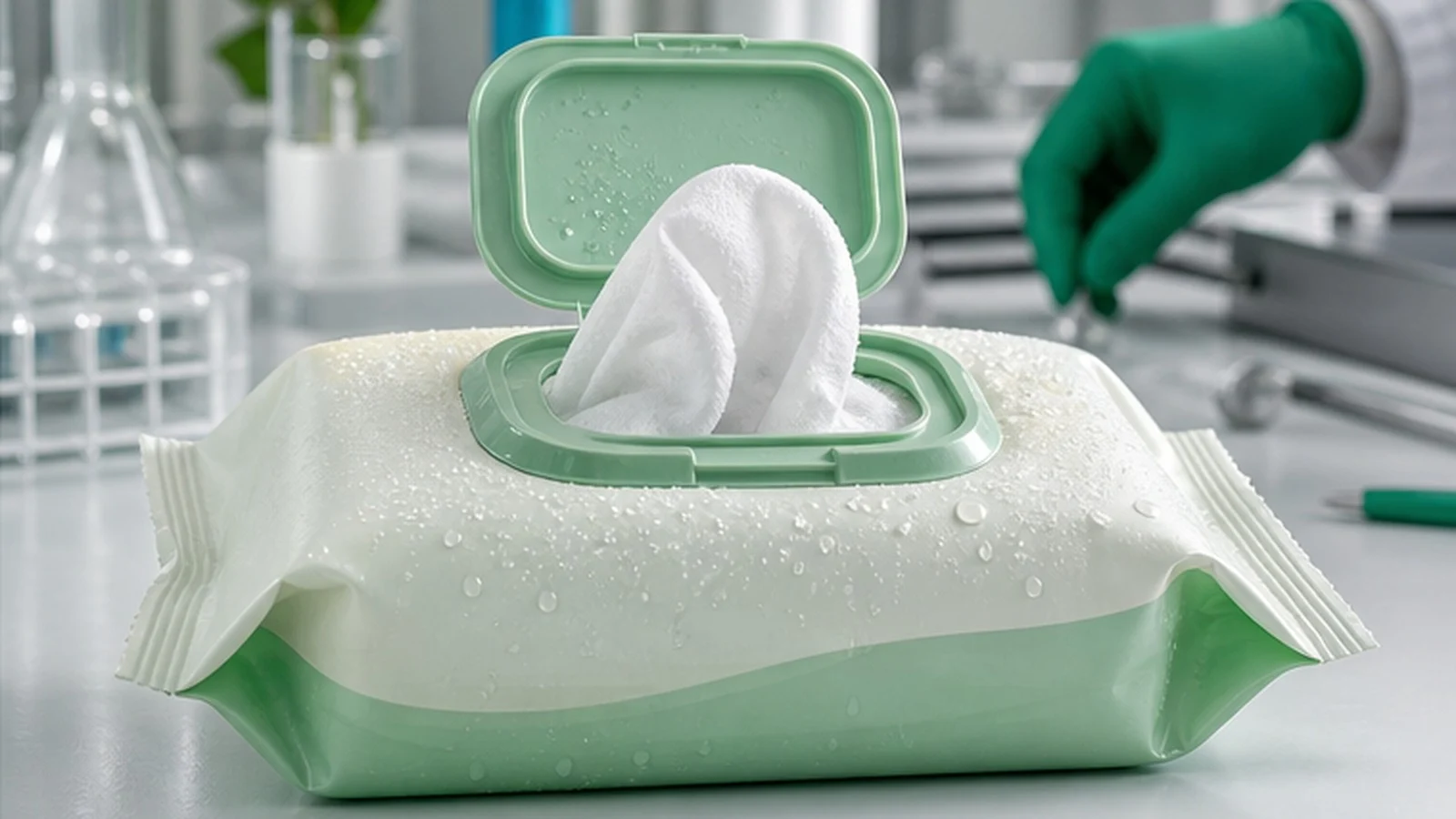
Wet wipes are opened dozens of times over the life of a pack. Every opening exposes the contents to air, so the barrier has to work in two phases: sealed storage before first use, and repeated resealing afterwards.
Barrier before first opening
PET / PE is adequate for short shelf-life and high-turnover products. BOPP / CPP offers better stiffness and a crisper feel. For long shelf life or alcohol-based formulations, PET / AL / PE prevents both moisture loss and alcohol evaporation, which is the failure most consumers notice as dried-out wipes.
Reseal performance
The resealable label is the component that determines real-world performance. Adhesive tack has to survive repeated peel cycles without either losing grip or delaminating the film surface. Label size matters too: a label that only just covers the dispensing aperture will lose seal integrity as the adhesive picks up fibres and lotion residue.
- Specify the number of peel cycles the label must survive, based on pack count.
- Check adhesive compatibility with your lotion, particularly with high-alcohol or oil-based formulas.
- Size the aperture so wipes dispense one at a time without tearing.
- Confirm the label material tolerates the printing and converting process without curling.
Format options
Back seal bags handle 30-piece to 90-piece counts efficiently. Larger counts benefit from a rigid plastic lid, which raises cost but delivers the most reliable long-term reseal.
Validation
We test reseal cycles and weight loss over time on filled packs with your actual lotion, since adhesive behaviour changes noticeably with formulation.