
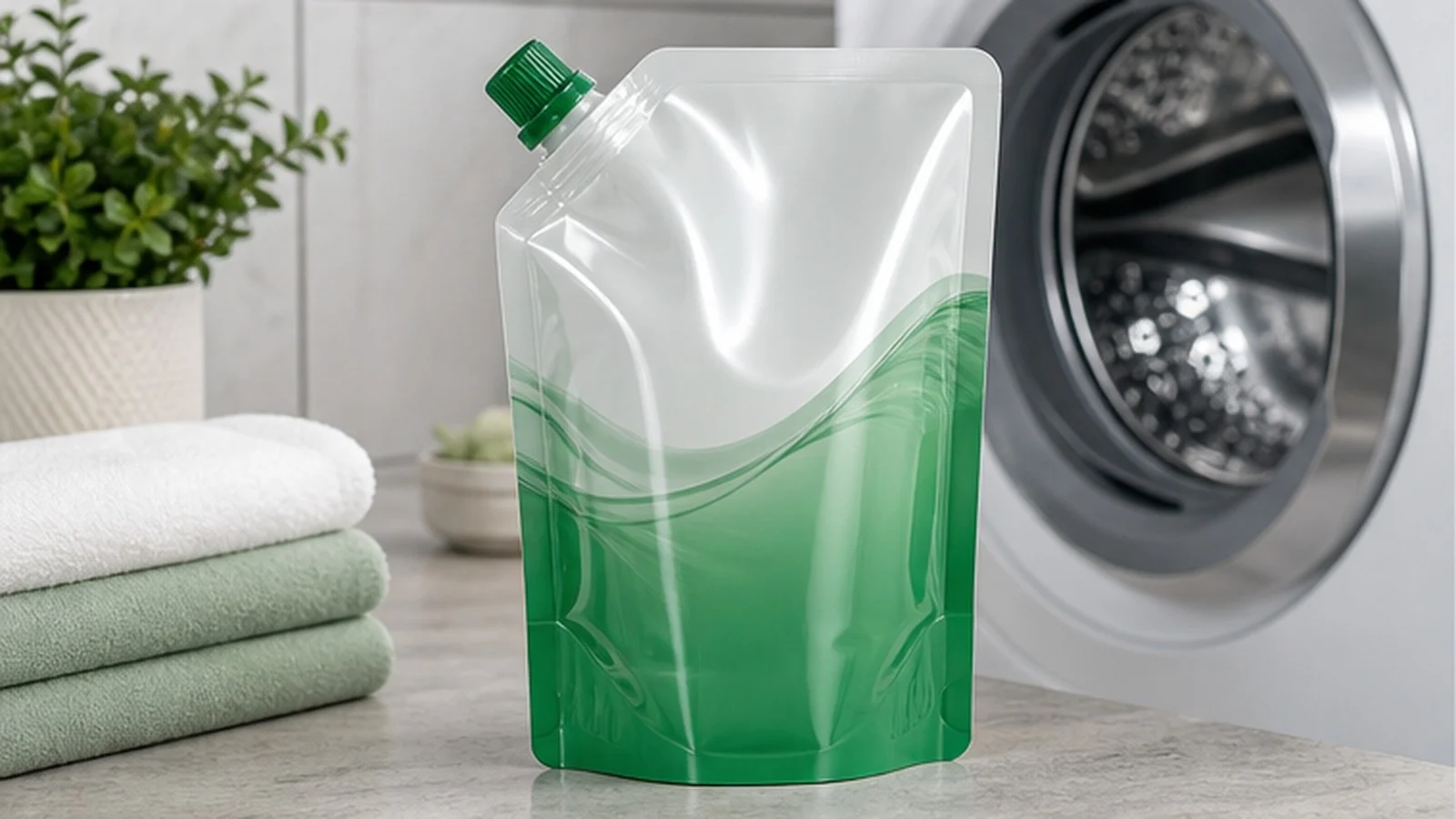
Liquid detergent refills are one of the clearest wins for flexible packaging: a pouch uses far less plastic per litre than a rigid bottle and ships flat. The engineering challenge is that detergent chemistry is aggressive and a full pouch carries real hydraulic load.
Chemical resistance
Surfactants, enzymes and fragrance oils can attack sealant layers and adhesives over time, showing up as delamination or stress cracking months after filling. PA / PE is the usual choice because nylon resists both puncture and environmental stress cracking under liquid load. Compatibility should be confirmed with your exact formulation, not a generic detergent, since fragrance systems vary widely in aggressiveness.
Spout and pouring design
- Spout diameter determines pour rate. Wider spouts empty faster but splash more when refilling a narrow bottle neck.
- Corner-mounted spouts pour more controllably one-handed than top-centre spouts on large formats.
- Cap type has to match your capping equipment torque and any tamper-evidence requirement.
- A bottom gusset that stays stable when partly emptied prevents tipping during pouring.
Format range
320 g to 500 g suits single-use top-ups, while 1 kg to 2 kg covers the main refill market. Above 2 kg the hydraulic load on seals grows quickly and film thickness has to increase, which erodes the cost advantage.
Pre-production validation
We run drop tests on filled pouches and accelerated ageing with your actual formulation before releasing a specification, since chemical compatibility failures appear late and are expensive to discover in market.