
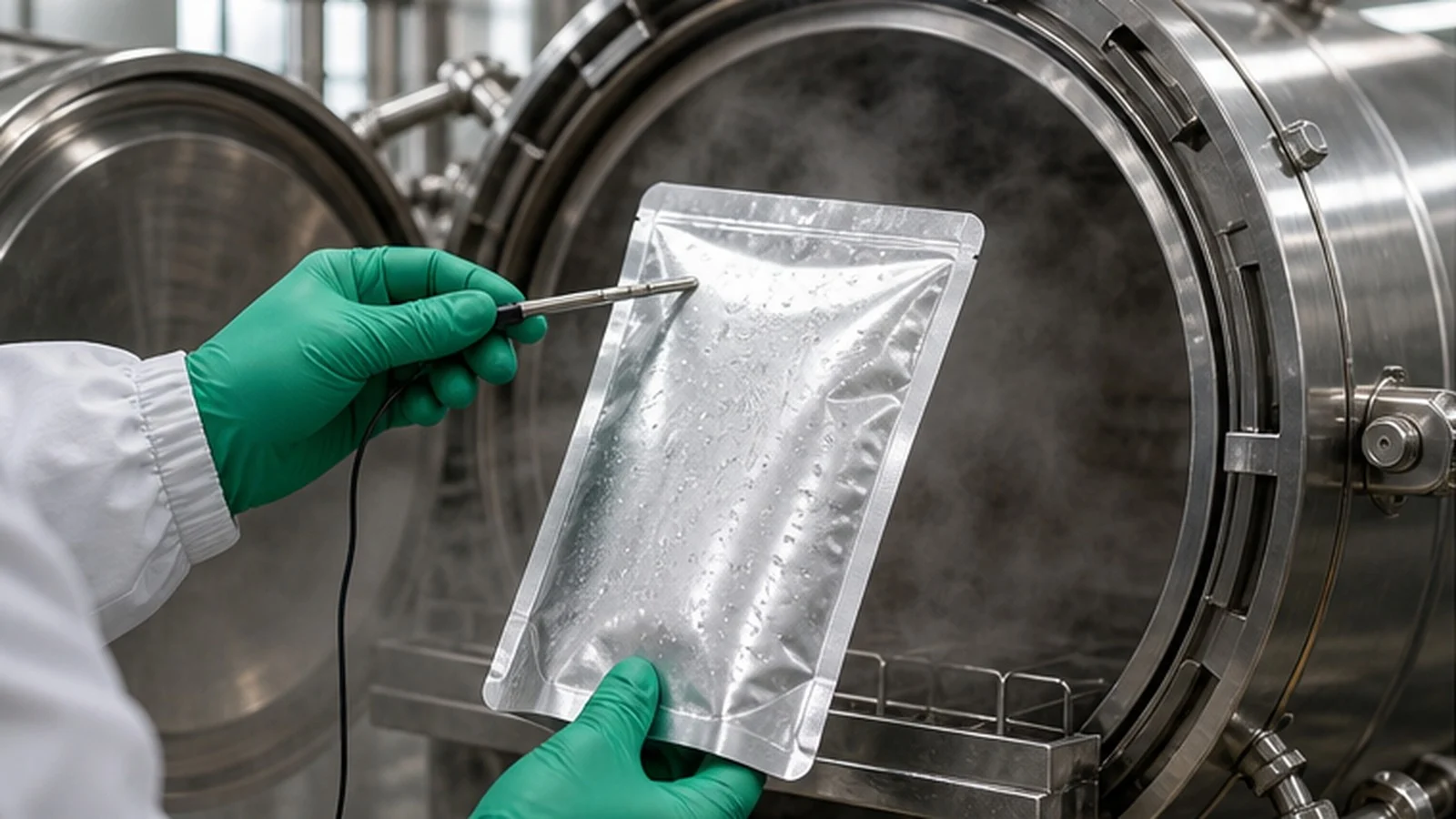
A retort pouch is exposed to pressurised steam at 121°C or higher, sometimes up to 135°C, while filled with product. Every layer, adhesive and seal in the structure has to hold under those conditions, which is why retort is the least forgiving application in flexible packaging.
Structure requirements
Retort-grade cast polypropylene (RCPP) is the standard sealant because ordinary CPP softens too far at sterilisation temperature. Adhesives must be retort-rated: standard laminating adhesives can lose bond strength in hot water and cause delamination that appears as cloudy patches. PET / AL / PA / RCPP remains the reference structure for long ambient shelf life.
Checks before production
- Seal strength measured after retort, not before, on filled and processed pouches.
- Delamination inspection following the full sterilisation cycle at your actual time and temperature.
- Burst and drop testing on processed pouches to reflect post-retort handling.
- Migration compliance documentation for the temperature range in use.
Process details that cause failures
Overfilling reduces headspace and raises internal pressure during processing, which stresses the top seal. Product residue in the seal area is the other frequent cause of leakers, particularly with oily sauces. Both are filling-line issues rather than material issues, so they are worth reviewing alongside the structure.
How we validate with you
We run retort trials at your specified cycle with your product and report seal strength before and after processing. If the cycle is more aggressive than the structure supports, we say so and propose an alternative rather than shipping pouches that will leak in the autoclave.