
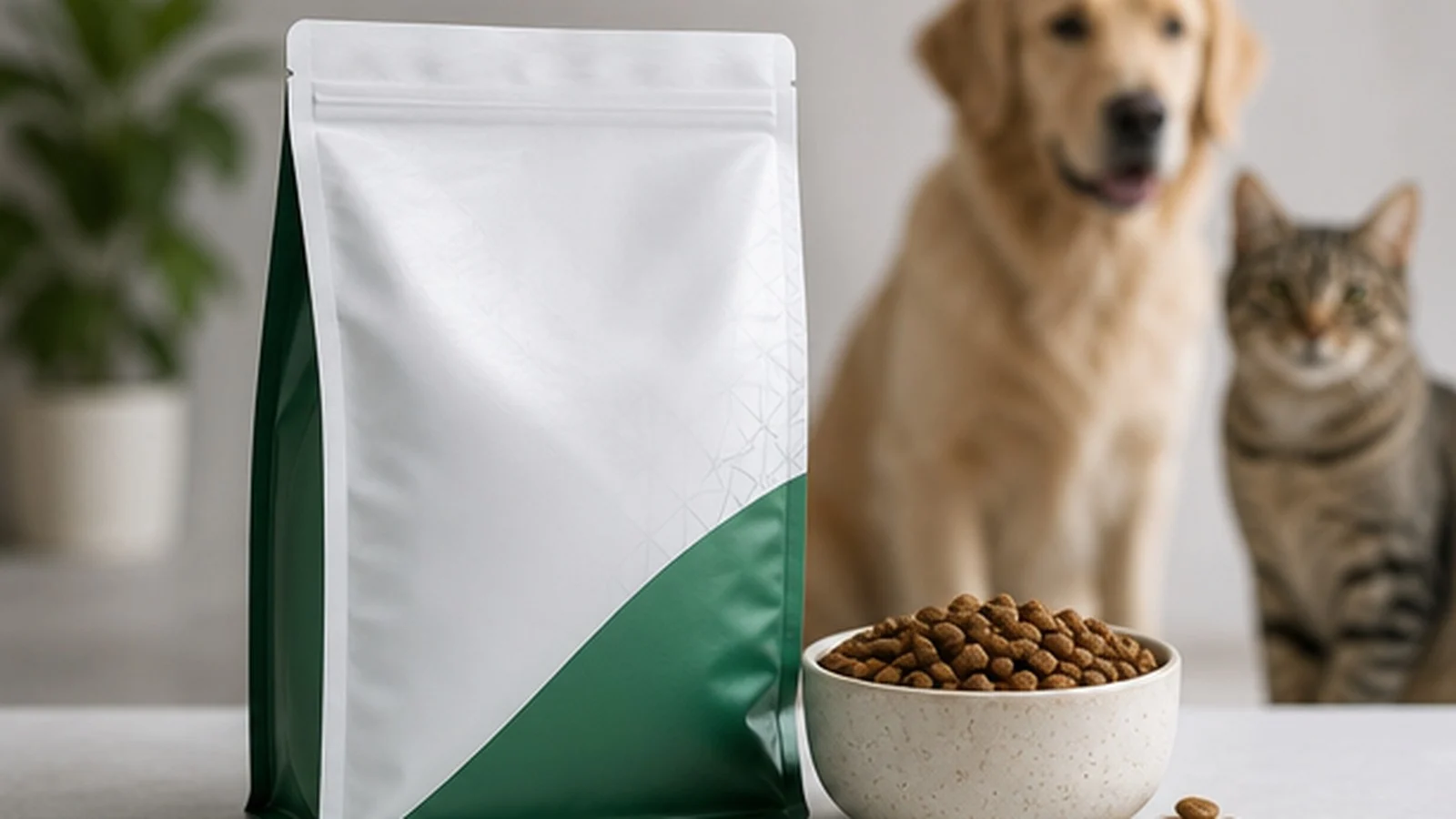
Dry pet food carries a high fat load, and fat is what oxidises. When it does, the product develops rancid notes that dogs and cats detect long before a human inspection would flag a problem. Rejected palatability is the failure mode that matters commercially, not visible spoilage.
What the packaging has to control
Oxygen ingress drives oxidation, so a metallised or aluminium barrier layer is normally required for anything with a twelve-month or longer shelf life. Moisture control matters second: kibble that picks up humidity loses crunch and becomes a mould risk.
Fat migration into the film itself is the constraint that is easy to overlook. Sealant layers have to resist fat absorption, otherwise seal strength drops during storage and bags fail in transit rather than on the line.
Format and handling
- Bulk bags from 5 kg to 15 kg need reinforced handles and puncture-resistant structures for palletised export.
- Retail bags from 500 g to 3 kg benefit from resealable zippers, since the pack is opened repeatedly over weeks.
- Single-serve treats and cat sticks need reliable small-format seals at high line speeds.
Testing that predicts field performance
We run drop and seal-strength testing on filled bags, not empty ones, and we recommend accelerated storage with your actual formulation. A structure that passes on paper can still fail after eight weeks with a high-fat recipe, which is why we test with the real product before releasing a specification.