
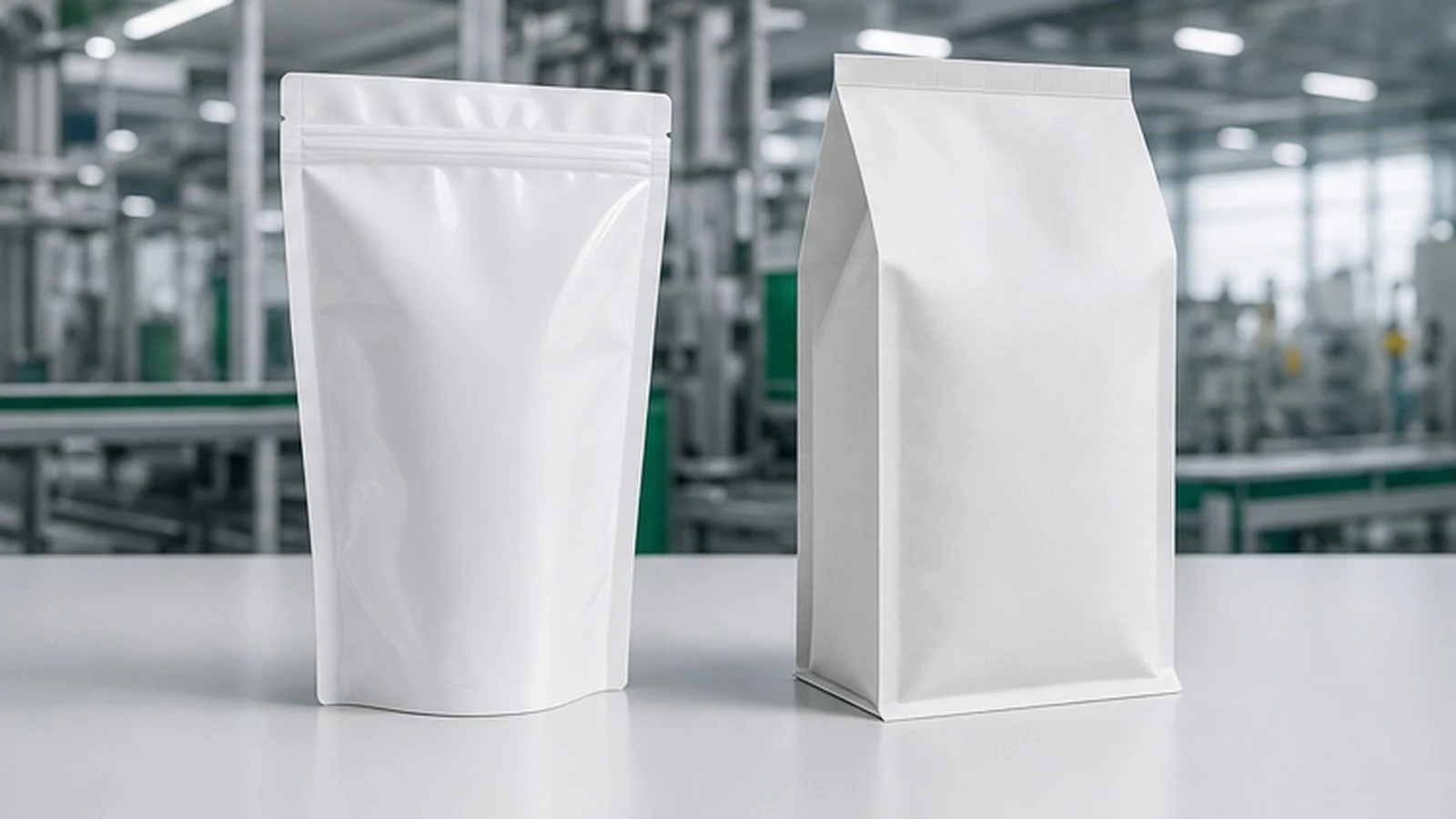
Stand-up pouches and flat bottom bags are the two most requested retail formats in flexible packaging. They look similar in a rendering and behave quite differently on a filling line and on a shelf.
Stand-up pouch
A stand-up pouch uses a bottom gusset that opens into a base when filled. It is the more economical of the two, uses less film per unit and runs well across a wide fill-weight range from small samples to family packs. The front panel curves slightly, so artwork reads well from an angle but offers less flat print area.
It is the right default for launch products, refill packs, price-sensitive categories and anything below roughly 500 g where cost per bag matters most.
Flat bottom bag
A flat bottom bag, also called a box pouch or eight-side seal bag, has five printable panels and a rigid rectangular base. It stands squarely without support, blocks neatly on shelf and gives the most premium presentation available in flexible packaging. The trade-off is more film, more tooling and a higher unit cost.
It suits specialty coffee, premium pet food, gifting and any product where shelf blocking and perceived value justify the added cost.
Direct comparison
- Shelf presence: flat bottom bag is stronger, especially in multi-facing displays.
- Print area: flat bottom gives five panels including two sides and a base.
- Cost per bag: stand-up pouch is lower at equal volume.
- Fill range: stand-up pouch from 50 g upward, flat bottom typically from 125 g upward.
- Stability when partly used: flat bottom holds its shape better.
Getting the decision right
Bring your fill weight, product density, target shelf price and filling equipment to the conversation. We can quote both formats side by side and supply samples in each, so the decision is based on how the bag actually handles rather than on a rendering.