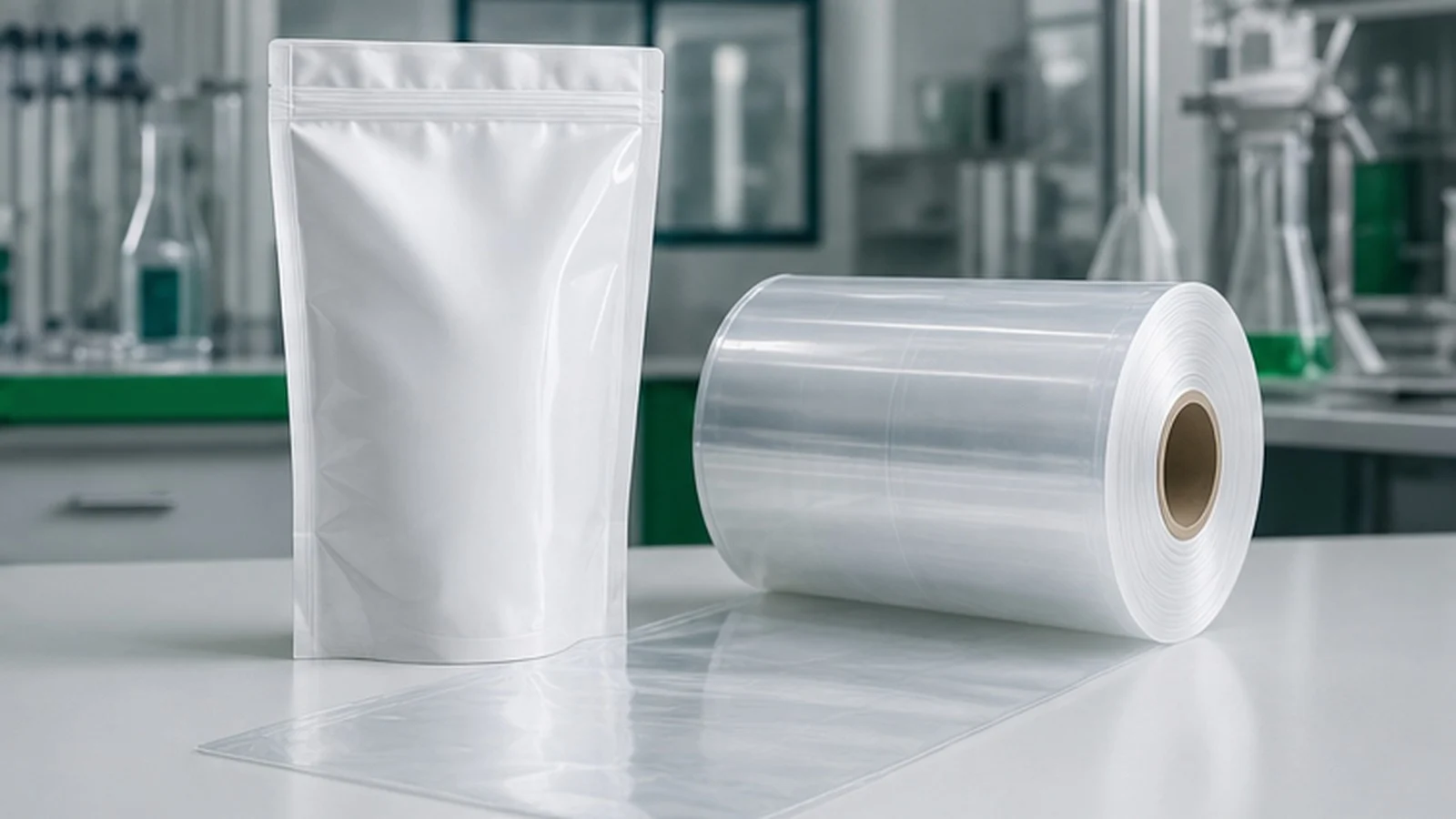
A mono-material pouch is built from films of a single polymer family, typically all-PE or all-PP, so the whole bag can enter one recycling stream. Compared with a PET / AL / PE laminate that is a real gain at end of life. It is also a genuine change in performance that has to be designed around.
What you gain
Sortability is the headline benefit. A mono-PE pouch can be processed in existing polyethylene film streams where those streams are collected, which is what recyclability assessments reward. Mono-material films also reduce the number of adhesive and tie layers in the structure, which can simplify qualification.
What you give up
Oxygen and moisture barrier is the main constraint. A metallised or aluminium layer still outperforms coated mono-material film, so products with long ambient shelf lives and oxygen-sensitive contents are the hardest to convert. Heat resistance is the second constraint: PE-based structures have a narrower sealing window and are not suited to retort sterilisation.
Stiffness and machinability differ too. Mono-PE film is softer than a PET-faced laminate, so form-fill-seal lines set up for stiff webs often need adjustments to tension and sealing parameters.
A practical migration order
- Start with short shelf-life, dry and low-sensitivity products such as snacks, pasta and non-food dry goods.
- Move next to secondary and refill packs where barrier demands are lower.
- Hold high-barrier categories such as freshly roasted coffee, retort meals and long-life pet food until barrier-coated mono films are validated for your specific shelf life.
How we test it with you
We supply sample rolls and finished pouches for line trials before any production commitment, and we run barrier and seal-strength testing against your target shelf life. Where a mono-material structure cannot meet the requirement we say so and propose a staged plan, rather than shipping packaging that will fail in the market.